


Chrysler All Models Touch Up Paint (519 OEM Colors)
Search for your All Models's color
-

Bright White
ChryslerCOLOR CODEW7/
GW7 - Bright White 🔥 9 sold recently -
Bright White
ChryslerCOLOR CODEGW7 -
Bright White 🔥 3 sold recently -

Claret Red Pearl Metallic
ChryslerCOLOR CODEGM4 -
Claret Red Pearl Metallic 🔥 2 sold recently -

Medium or Ember Gold Poly
ChryslerCOLOR CODEJJ-
1 (1968) - Medium or Ember Gold Poly 🔥 2 sold recently -

Alaskan White
ChryslerCOLOR CODEW
(1961) - Alaskan White 🔥 2 sold recently -

Charger Red
ChryslerCOLOR CODE33-
1 (1968) - Charger Red 🔥 1 sold recently -

Desert Rose
ChryslerCOLOR CODE35
(1956) - Desert Rose 🔥 1 sold recently -

Geranium Red
ChryslerCOLOR CODE36
(1956) - Geranium Red 🔥 1 sold recently -

Mauve Poly
ChryslerCOLOR CODE66-
1 (1965) - Mauve Poly 🔥 1 sold recently -

Deep Plum Poly
ChryslerCOLOR CODE88-
1 (1966) - Deep Plum Poly 🔥 1 sold recently -

Skyline Gray
ChryslerCOLOR CODE2037
(1955) - Skyline Gray 🔥 1 sold recently -

Tango Red
ChryslerCOLOR CODE2040-
H (1955) - Tango Red 🔥 1 sold recently -

Embassy Gray Metallic
ChryslerCOLOR CODE2125
(1955) - Embassy Gray Metallic 🔥 1 sold recently -

Regal Gold Poly
ChryslerCOLOR CODEAA-
1 (1965) - Regal Gold Poly 🔥 1 sold recently -

Bright Blue or Blue Fire Metallic
ChryslerCOLOR CODEB-
5 (1970) - Bright Blue or Blue Fire Metallic 🔥 1 sold recently -

Starlight Blue Poly
ChryslerCOLOR CODEB-
9 (1977) - Starlight Blue Poly 🔥 1 sold recently
Find Your Chrysler All Models Paint Code
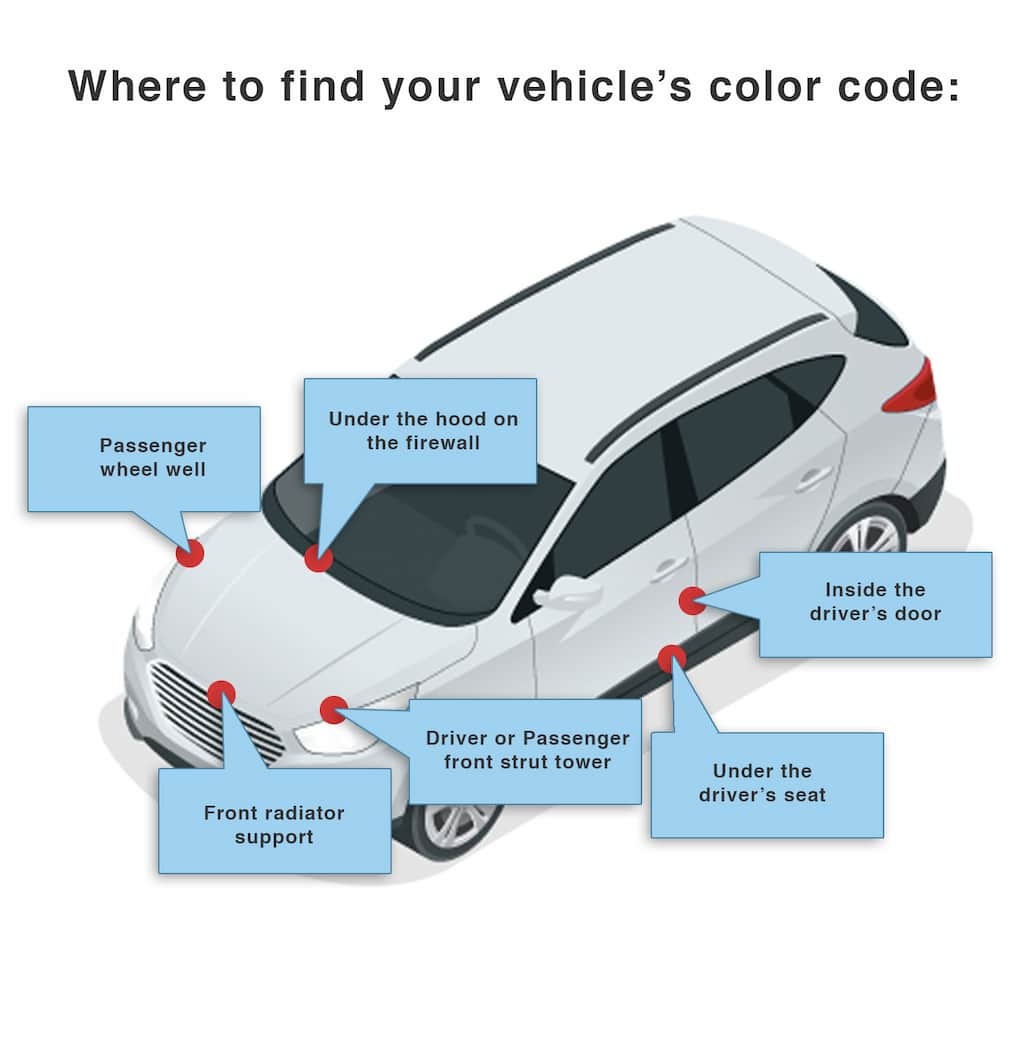
Chrysler paint codes can be difficult to find. In the good old days, they were on top of the radiator support, often hidden under engine grease and oil. Later models put them on the drivers door jamb. Typical format: BS/GBS, but only BS is the color code; it can also appear as QBS, PBS, TBS, etc., with the first letter as a confusing "Year Code." BS corresponds to Deep Water Blue Pearl Clearcoat; the G in GBS is not part of the color code.
Chrysler All Models Paint Info
Chrysler All Models Colors by Year
Let us know the year your All Models was manufactured. We'll eliminate colors that won't match your vehicle.
- 1995 (31 colors)
- 1994 (26 colors)
- 1993 (26 colors)
- 1992 (27 colors)
- 1991 (21 colors)
- 1989 (20 colors)
- 1988 (18 colors)
- 1978 (17 colors)
- 1977 (26 colors)
- 1976 (29 colors)
- 1975 (23 colors)
- 1974 (19 colors)
- 1973 (18 colors)
- 1972 (16 colors)
- 1971 (28 colors)
- 1970 (30 colors)
- 1969 (27 colors)
- 1968 (24 colors)
- 1966 (23 colors)
- 1965 (26 colors)
- 1964 (19 colors)
- 1963 (21 colors)
- 1961 (19 colors)
- 1958 (21 colors)
- 1957 (18 colors)
- 1956 (20 colors)
- 1955 (19 colors)