


Mitsubishi Eclipse Touch Up Paint (63 OEM Colors)
Search for your Eclipse's color
-

Almaden Red Pearl
MitsubishiCOLOR CODER65 -
Almaden Red Pearl -
Primal Red Pearl
MitsubishiCOLOR CODER70 -
Primal Red Pearl -

Platinum Pearl Metallic
MitsubishiCOLOR CODES13 -
Platinum Pearl Metallic -

Light Turquoise Metallic
MitsubishiCOLOR CODET13 -
Light Turquoise Metallic -

Light Blue Pearl
MitsubishiCOLOR CODET19 -
Light Blue Pearl -

Tampa Blue Pearl
MitsubishiCOLOR CODET45 -
Tampa Blue Pearl -

UV Blue Pearl
MitsubishiCOLOR CODET60 -
UV Blue Pearl -

Modern Blue Pearl
MitsubishiCOLOR CODET67 -
Modern Blue Pearl -
Ruri Blue Pearl
MitsubishiCOLOR CODET70 -
Ruri Blue Pearl -

Bright Blue Pearl
MitsubishiCOLOR CODET73 -
Bright Blue Pearl -

Carbon Pearl
MitsubishiCOLOR CODEU09 -
Carbon Pearl -

Northstar White
MitsubishiCOLOR CODEW12/
PW7 - Northstar White -

Frost White
MitsubishiCOLOR CODEW26 -
Frost White -
Lamp Black
MitsubishiCOLOR CODEX63 -
Lamp Black -

Biscayne Green Pearl
MitsubishiCOLOR CODEY76 -
Biscayne Green Pearl
Find Your Mitsubishi Eclipse Paint Code
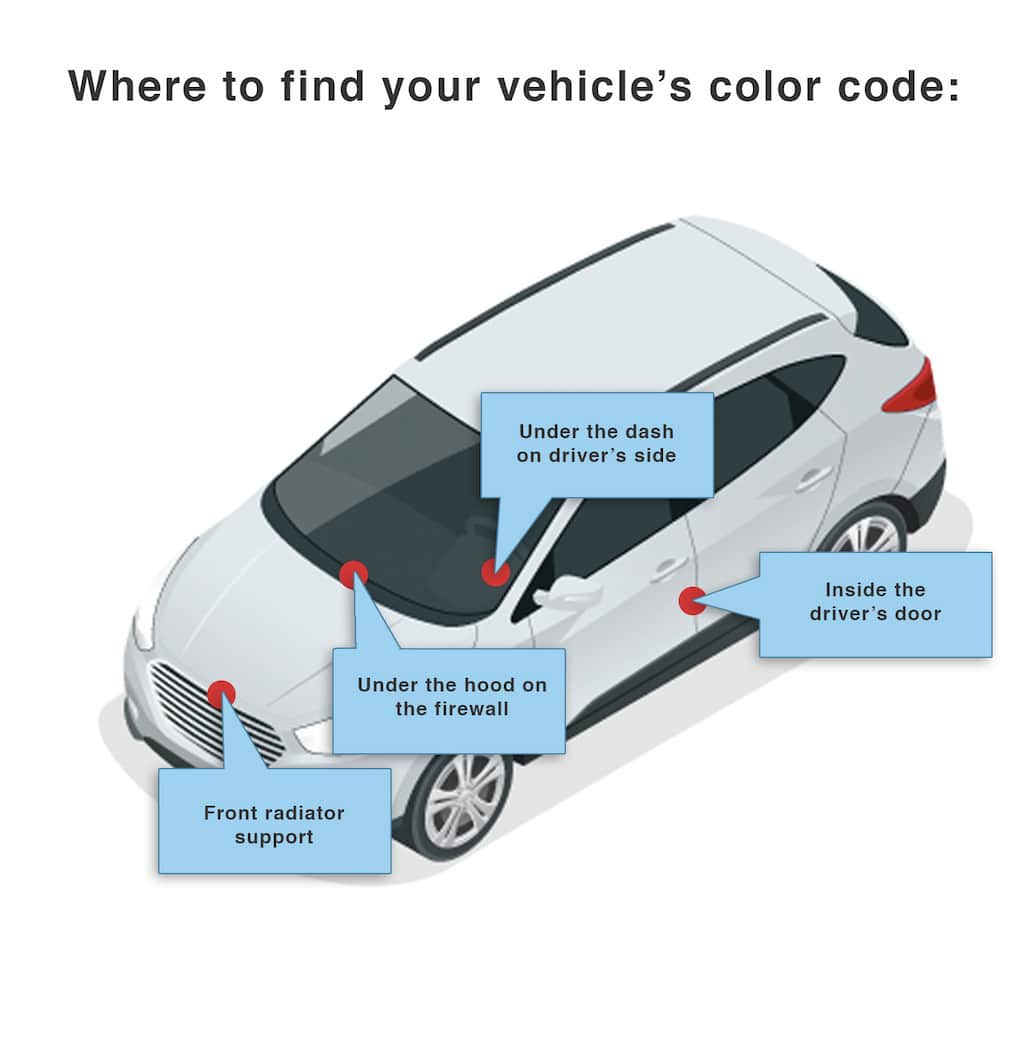
Mitsubishi paint codes are on a tag in the firewall area of the car, not on an exterior panel. The color code sits at the bottom mid-left part of that tag. Codes include letters, dashes, and numbers. The code R71 corresponds to Passion Red Clearcoat. R71 may be called Passion Red Clearcoat on some models. R71 may be called Red Clearcoat or Speed Red Clearcoat on others. Model marketing names can vary even for the same code.
Mitsubishi Eclipse Paint Info
Mitsubishi Eclipse Colors by Year
Let us know the year your Eclipse was manufactured. We'll eliminate colors that won't match your vehicle.
- 2012 (5 colors)
- 2011 (5 colors)
- 2010 (8 colors)
- 2009 (8 colors)
- 2008 (10 colors)
- 2007 (9 colors)
- 2006 (8 colors)
- 2005 (8 colors)
- 2004 (5 colors)
- 2003 (9 colors)
- 2002 (8 colors)
- 2001 (8 colors)
- 2000 (8 colors)
- 1999 (8 colors)
- 1998 (8 colors)
- 1997 (9 colors)
- 1996 (14 colors)
- 1995 (10 colors)
- 1994 (12 colors)
- 1993 (10 colors)
- 1992 (8 colors)
- 1991 (9 colors)
- 1990 (6 colors)