


Mercury All Models Touch Up Paint (533 OEM Colors)
Search for your All Models's color
-

Fawn
MercuryCOLOR CODE89
(1981) - Fawn 🔥 2 sold recently -

Tuxedo Black
MercuryCOLOR CODE01
(1955) - Tuxedo Black 🔥 1 sold recently -

Black
MercuryCOLOR CODE1C/
1724 - Black 🔥 1 sold recently -

Marble White
MercuryCOLOR CODE07
(1958) - Marble White 🔥 1 sold recently -

Light Spruce Metallic
MercuryCOLOR CODE7B
(1982) - Light Spruce Metallic 🔥 1 sold recently -

Jamaican Yellow
MercuryCOLOR CODE8
(1966) - Jamaican Yellow 🔥 1 sold recently -

Emerald Poly
MercuryCOLOR CODE16
(1958) - Emerald Poly 🔥 1 sold recently -

Tropic Blue
MercuryCOLOR CODE17
(1955) - Tropic Blue 🔥 1 sold recently -

Yukon Yellow
MercuryCOLOR CODE18
(1955) - Yukon Yellow 🔥 1 sold recently -

Spring Valley Green
MercuryCOLOR CODE18A
(1957) - Spring Valley Green 🔥 1 sold recently -

Arctic White
MercuryCOLOR CODE22
(1955) - Arctic White 🔥 1 sold recently -

Bright Red
MercuryCOLOR CODE27/
5734 - Bright Red 🔥 1 sold recently -

Twilight Turquoise
MercuryCOLOR CODE97
(1958) - Twilight Turquoise 🔥 1 sold recently -

Persimmon
MercuryCOLOR CODE2188
(1956) - Persimmon 🔥 1 sold recently -

Classic White
MercuryCOLOR CODE2196
(1956) - Classic White 🔥 1 sold recently -

Lauderdale Blue
MercuryCOLOR CODE2208
(1956) - Lauderdale Blue 🔥 1 sold recently
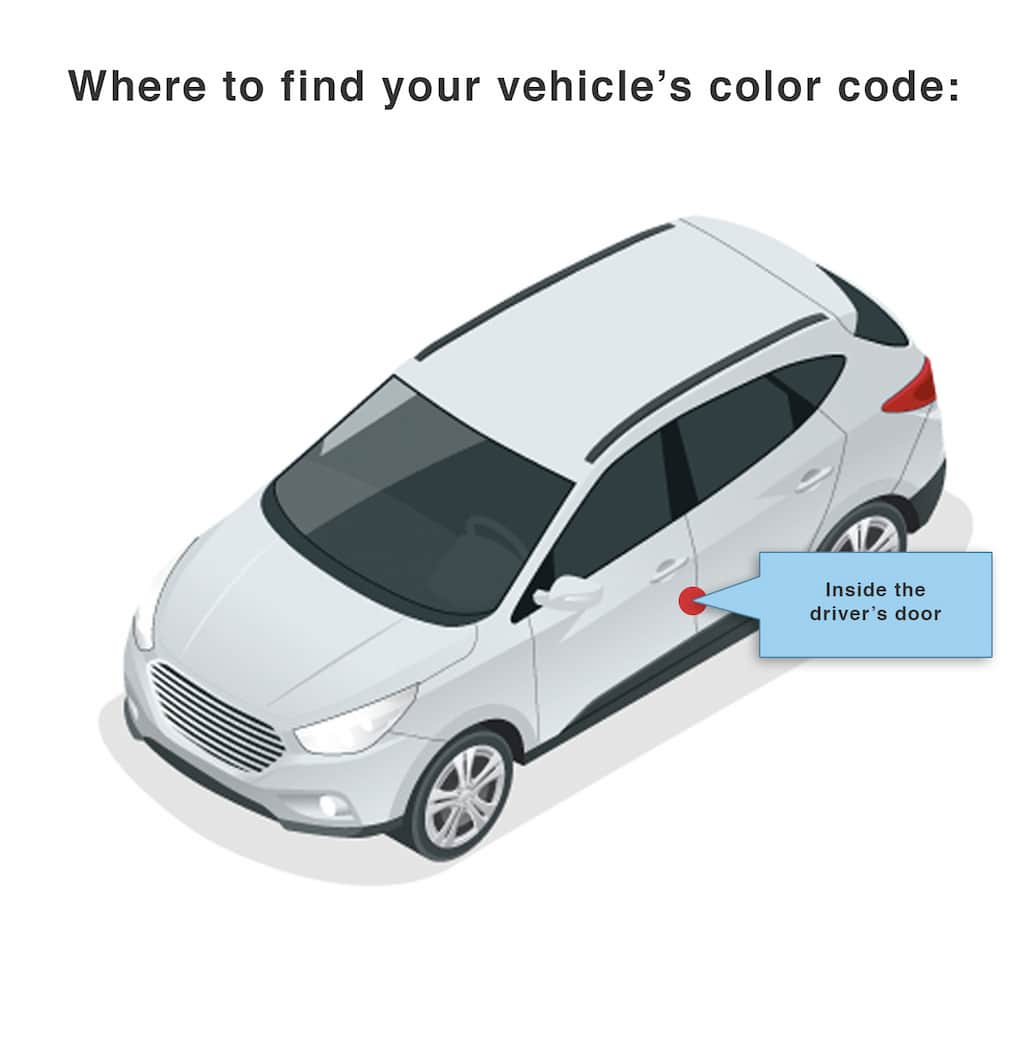
Find Your Mercury All Models Paint Code
Mercury places the paint color code on the drivers door jamb. On the color plate, the code appears near EX PT (Exterior Paint), typically above or below; sometimes the actual color is embossed on the plate and not where expected. The typical format is WT/M6640, but the M6640 part is rarely used and often only WT appears. WT corresponds to Performance White Clearcoat. Pre 1970 Mercurys can be problematic due to same-name, different-color issues and different codes.
Mercury All Models Paint Info
Mercury All Models Colors by Year
Let us know the year your All Models was manufactured. We'll eliminate colors that won't match your vehicle.
- 1986 (48 colors)
- 1985 (43 colors)
- 1984 (43 colors)
- 1983 (51 colors)
- 1982 (37 colors)
- 1981 (38 colors)
- 1979 (32 colors)
- 1978 (25 colors)
- 1977 (24 colors)
- 1976 (24 colors)
- 1968 (21 colors)
- 1967 (19 colors)
- 1966 (17 colors)
- 1965 (18 colors)
- 1964 (17 colors)
- 1963 (16 colors)
- 1962 (16 colors)
- 1961 (16 colors)
- 1960 (19 colors)
- 1959 (17 colors)
- 1958 (15 colors)
- 1957 (18 colors)
- 1956 (14 colors)
- 1955 (14 colors)