


1999 BMW Touch Up Paint (41 OEM Colors)
Search for your color
-

Alpine White III
BMWCOLOR CODE300 -
Alpine White III 🔥 53 sold recently -

Jet Black
BMWCOLOR CODE668 -
Jet Black 🔥 21 sold recently -

Titan Silver Metallic
BMWCOLOR CODE354 -
Titan Silver Metallic 🔥 20 sold recently -

Bright Red
BMWCOLOR CODE314 -
Bright Red 🔥 5 sold recently -

Arctic Silver Metallic
BMWCOLOR CODE309 -
Arctic Silver Metallic 🔥 4 sold recently -

Orient Blue Metallic
BMWCOLOR CODE317 -
Orient Blue Metallic 🔥 4 sold recently -

Atlanta Blue Metallic
BMWCOLOR CODE306 -
Atlanta Blue Metallic 🔥 2 sold recently -

Oxford Green Pearl Metallic
BMWCOLOR CODE324 -
Oxford Green Pearl Metallic 🔥 2 sold recently -

Biarritz Blue Metallic
BMWCOLOR CODE363 -
Biarritz Blue Metallic 🔥 2 sold recently -

Topaz Blue Metallic
BMWCOLOR CODE364 -
Topaz Blue Metallic 🔥 2 sold recently -

Steel Blue Metallic
BMWCOLOR CODE372 -
Steel Blue Metallic 🔥 2 sold recently -

Imola Red II
BMWCOLOR CODE405 -
Imola Red II 🔥 2 sold recently -

Boston Green Metallic
BMWCOLOR CODE275 -
Boston Green Metallic 🔥 1 sold recently -

Avus Blue Pearl
BMWCOLOR CODE276 -
Avus Blue Pearl 🔥 1 sold recently -

Techno Violet Pearl
BMWCOLOR CODE299 -
Techno Violet Pearl 🔥 1 sold recently -

Cashmere Beige Metallic
BMWCOLOR CODE301 -
Cashmere Beige Metallic 🔥 1 sold recently

For small chips & scratches
Customized Color Paint Pen
Repair tiny chips and scratches with precision. Perfect for small nicks from rocks or door dings, the fine tip applicator makes it easy for beginners to achieve a clean, factory-quality finish.

For Medium-sized Chips & Scratches
Customized Color Paint Bottle
Tackle medium-sized scratches and chips with our Customized Color Paint Bottle. The built-in applicator brush provides smooth, controlled coverage, while the included basecoat delivers a perfect factory match in your custom paint color.

For larger areas & panel resprays
Customized Color Spray Can
Cover larger areas with a smooth, professional finish using ourcustomized color Spray Can. Designed for hoods, fenders, and larger scratches, this product provides consistent spray coverage and factory-matched color accuracy.

For large repairs & total resprays
Customized Color Professional Size Paint
When your repair job calls for more than a touch-up, step up to our professional-size automotive paints. Available in Pint, Quart, or Gallon sizes, these paints are ready-to-spray using an airless spray gun.

For small chips & scratches
Customized Color Tricoat Paint Pens
Repair tiny chips and scratches with precision. Perfect for small nicks from rocks or door dings, the fine tip applicator makes it easy for beginners to achieve a clean, factory-quality finish. Each order includes a basecoat and a midcoat pen.

For Medium-sized Chips & Scratches
Customized Color Tricoat Paint Bottles
Tackle medium-sized scratches and chips with our Customized Color Paint Bottles. The built-in applicator brush provides smooth, controlled coverage, while the basecoat & midcoat deliver a perfect factory match in your custom paint color.

For larger areas & panel resprays
Customized Color Tricoat Spray Cans
Cover larger areas with a smooth, professional finish using our customized color basecoat & midcoat Spray Cans. Designed for hoods, fenders, and larger scratches, this product provides consistent spray coverage and factory-matched color accuracy.
For large repairs & total resprays
Customized Color Tricoat Professional Size Paint
When your repair job calls for more than a touch-up, step up to our professional-size automotive paints. Available in Pint, Quart, or Gallon sizes, these paints are ready-to-spray using an airless spray gun. Each order includes a basecoat & a midcoat paint.
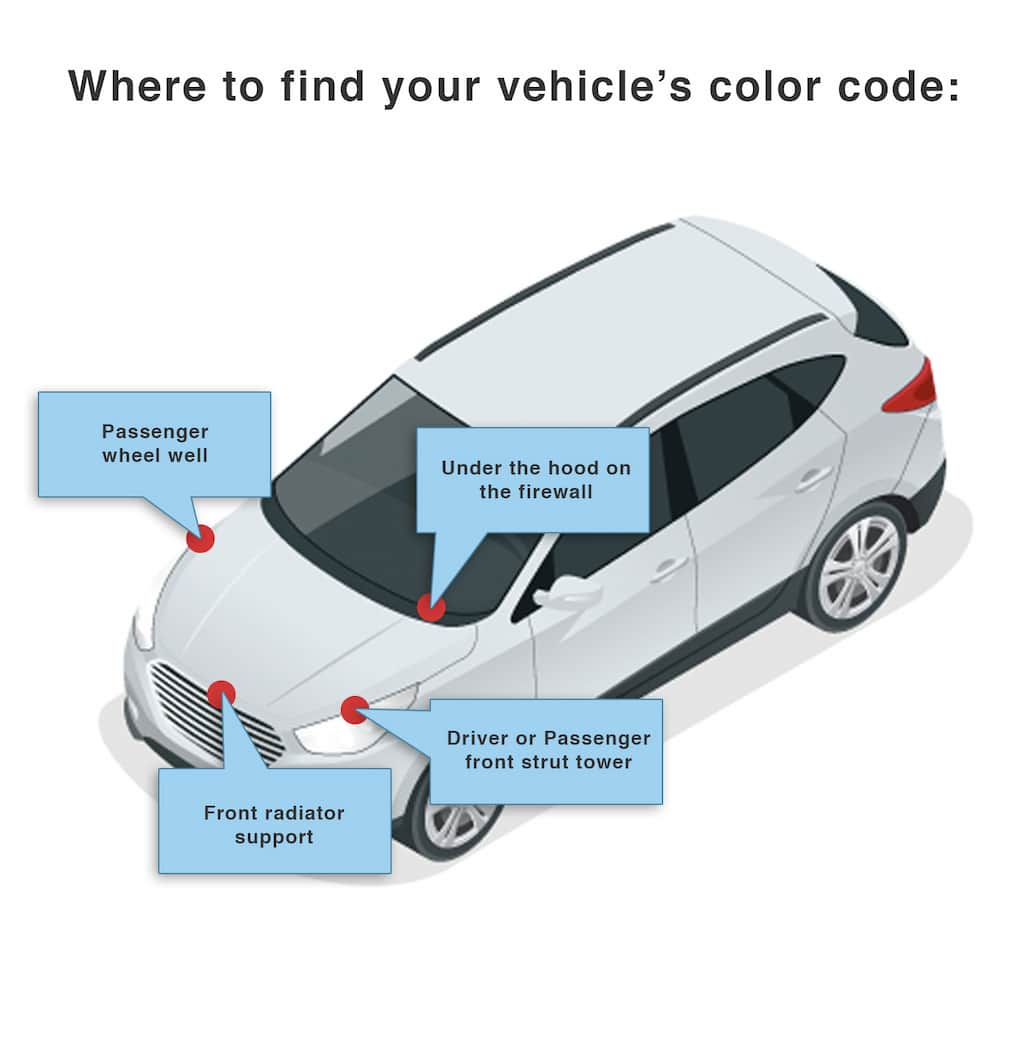
Find Your 1999 BMW Paint Code
BMW Color Codes are usually found on the Color ID Tag in the driver-side door jamb or B-pillar area. The Color ID Tag is typically a sticker or plate; on some models and years it may be under the hood, sometimes at the back of the engine compartment near the firewall. BMW Color Codes are usually 3 digits, but can also appear as A52 or an older format like 354/7; common examples include 300, 475, A52, or 354/7.
1999 BMW Background Info
BMW Models Released in 1999
- 3 Series (15 colors)
- 5 Series (15 colors)
- 7 Series (17 colors)
- M3 (9 colors)
- M Roadster (8 colors)
- Z3 Roadster (15 colors)