


Volvo 240 Touch Up Paint (10 OEM Colors)
Search for your 240's color
-

Cascade White
VolvoCOLOR CODE42 -
Cascade White 🔥 1 sold recently -

Appalachian Blue
VolvoCOLOR CODE139 -
Appalachian Blue 🔥 1 sold recently -

Richelieu (Wine) Red
VolvoCOLOR CODE141 -
Richelieu (Wine) Red 🔥 1 sold recently -

Vernon (Dark) Green
VolvoCOLOR CODE142 -
Vernon (Dark) Green 🔥 1 sold recently -

Rose Beige
VolvoCOLOR CODE172 -
Rose Beige 🔥 1 sold recently -

Cornado Gold Metallic
VolvoCOLOR CODE135 -
Cornado Gold Metallic -

Mist Brown
VolvoCOLOR CODE146 -
Mist Brown -

Yellow
VolvoCOLOR CODE152 -
Yellow -

Tomato Red
VolvoCOLOR CODE173 -
Tomato Red -

Dusty Green Metallic
VolvoCOLOR CODE178 -
Dusty Green Metallic
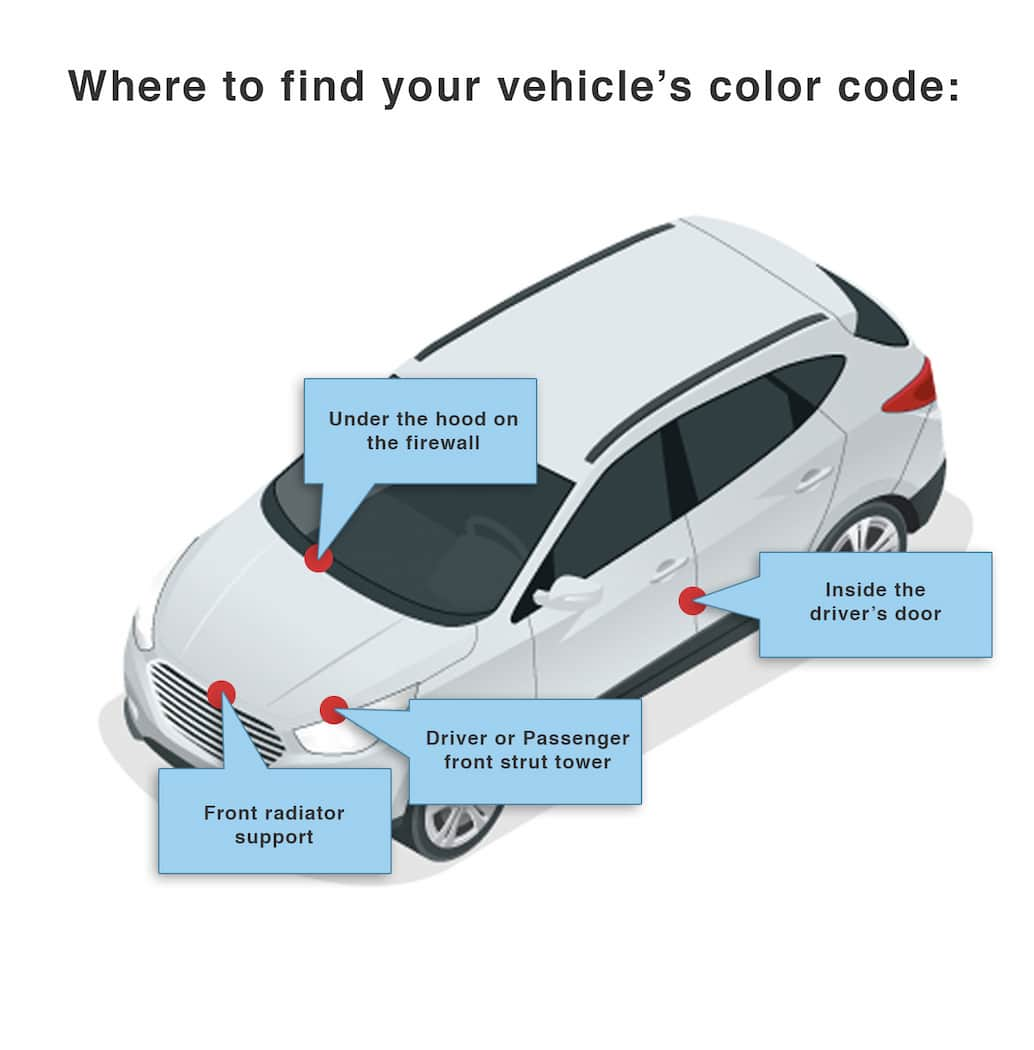
Find Your Volvo 240 Paint Code
Volvo paint codes can be anywhere in the engine compartment. They are typically on the radiator support, but may also be on the sheet metal on either side of the engine compartment, so finding them can be challenging. Typical color code format: 421. 421 corresponds to Dark Olive Pearl Clearcoat. Same color code, different name across models; for example, 421 could also be called Dark Green Clearcoat or Mystic Green Clearcoat.
Volvo 240 Paint Info
Volvo 240 Colors by Year
Let us know the year your 240 was manufactured. We'll eliminate colors that won't match your vehicle.
- 1982 (10 colors)