


Volkswagen Bus Touch Up Paint (130 OEM Colors)
Search for your Bus's color
-

Titan Red
VolkswagenCOLOR CODEL555 -
Titan Red 🔥 1 sold recently -

Savanna Beige
VolkswagenCOLOR CODEL620 -
Savanna Beige 🔥 1 sold recently -

Cumulus White
VolkswagenCOLOR CODEL680 -
Cumulus White 🔥 1 sold recently -

Brunswick Blue
VolkswagenCOLOR CODEL1018 -
Brunswick Blue 🔥 1 sold recently -

Bright Yellow
VolkswagenCOLOR CODEL11C -
Bright Yellow -

Mayan Green
VolkswagenCOLOR CODEL11D -
Mayan Green -

Panama Brown
VolkswagenCOLOR CODEL12A/
E9 - Panama Brown -

Castle Yellow
VolkswagenCOLOR CODEL12Y -
Castle Yellow -

Mignonette Gray
VolkswagenCOLOR CODEL14 -
Mignonette Gray -

Lemon Yellow
VolkswagenCOLOR CODEL15M -
Lemon Yellow -

Tunis Yellow
VolkswagenCOLOR CODEL16M -
Tunis Yellow -

Bright Orange
VolkswagenCOLOR CODEL20B
(1973) - Bright Orange -

Bright Orange
VolkswagenCOLOR CODEL20B/
E1 - Bright Orange -

Nepal (Fiesta) Orange
VolkswagenCOLOR CODEL20C -
Nepal (Fiesta) Orange -

Chrome Yellow
VolkswagenCOLOR CODEL21H -
Chrome Yellow -

Marina Yellow
VolkswagenCOLOR CODEL21M -
Marina Yellow
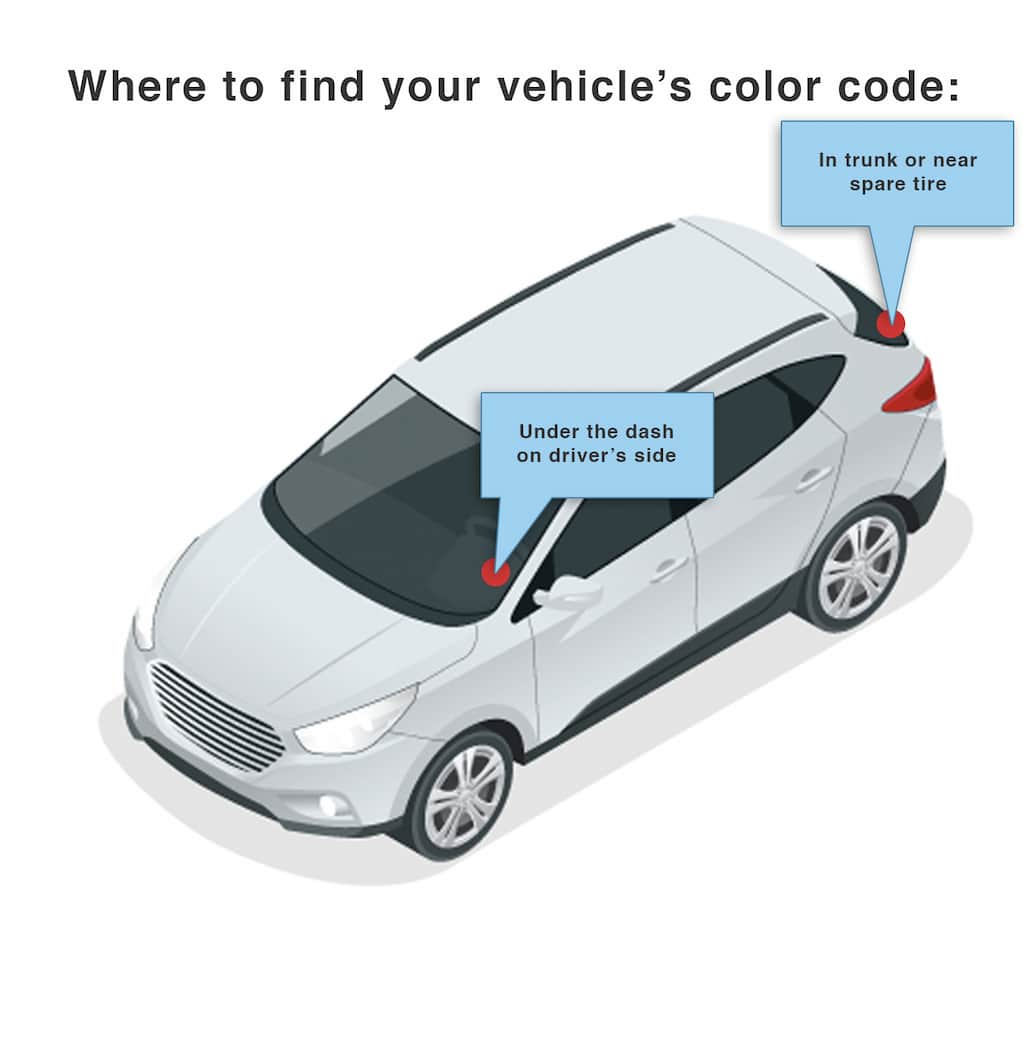
Find Your Volkswagen Bus Paint Code
Volkswagen paint codes can be difficult to find. Most are located around the spare tire area, printed on a paper color id tag that is guaranteed to fall off and disappear just when needed; not on a metal plate in the driver door jamb. Typical format: LD7X/2R (two codes: LD7X and 2R). LD7X corresponds to Platinum Gray Metallic Clearcoat; 2R is also used for the same color. Really old Volkswagen can be nearly impossible to figure out.
Volkswagen Bus Paint Info
Volkswagen Bus Colors by Year
Let us know the year your Bus was manufactured. We'll eliminate colors that won't match your vehicle.
- 1980 (3 colors)
- 1979 (9 colors)
- 1978 (16 colors)
- 1977 (26 colors)
- 1976 (20 colors)
- 1975 (27 colors)
- 1974 (23 colors)
- 1973 (4 colors)
- 1972 (19 colors)
- 1971 (17 colors)
- 1970 (15 colors)
- 1967 (16 colors)
- 1966 (12 colors)
- 1965 (16 colors)
- 1964 (11 colors)
- 1963 (8 colors)
- 1962 (9 colors)
- 1961 (8 colors)
- 1960 (7 colors)
- 1959 (20 colors)
- 1958 (13 colors)
- 1957 (6 colors)
- 1956 (3 colors)
- 1955 (6 colors)
- 1954 (3 colors)
- 1953 (4 colors)
- 1952 (4 colors)
- 1951 (1 colors)