


Ford Escape Touch Up Paint (151 OEM Colors)
Search for your Escape's color
-

Oxford White
FordCOLOR CODEYZ -
Oxford White 🔥 46 sold recently -

White Platinum Tricoat
FordCOLOR CODEUG -
White Platinum Tricoat 🔥 31 sold recently -
White Platinum Tricoat
FordCOLOR CODEUG/
M7204 - White Platinum Tricoat 🔥 29 sold recently -

Space White
FordCOLOR CODEA3 -
Space White 🔥 27 sold recently -

Carbonized Gray
FordCOLOR CODEM7 -
Carbonized Gray 🔥 27 sold recently -

Carbonized Gray Metallic
FordCOLOR CODEM7/
M7458 - Carbonized Gray Metallic 🔥 26 sold recently -

Agate Black Metallic
FordCOLOR CODEUM/
M7414 - Agate Black Metallic 🔥 26 sold recently -

Magnetic Metallic
FordCOLOR CODEJ7/
M7325 - Magnetic Metallic 🔥 23 sold recently -

Ruby Red Tricoat
FordCOLOR CODERR -
Ruby Red Tricoat 🔥 23 sold recently -

Black
FordCOLOR CODEUM -
Black 🔥 22 sold recently -

Vapor Blue
FordCOLOR CODEK1 -
Vapor Blue 🔥 21 sold recently -

Ingot Silver Metallic
FordCOLOR CODEUX/
M7226 - Ingot Silver Metallic 🔥 21 sold recently -

White Tricoat
FordCOLOR CODEAZ/
M7446 - White Tricoat 🔥 19 sold recently -

Deep Impact Blue Metallic
FordCOLOR CODEJ4 -
Deep Impact Blue Metallic 🔥 19 sold recently -

Ingot Silver Metallic
FordCOLOR CODEUX -
Ingot Silver Metallic 🔥 19 sold recently -

Absolute Black Pearl
FordCOLOR CODEG1/
M7343 - Absolute Black Pearl 🔥 18 sold recently
Find Your Ford Escape Paint Code
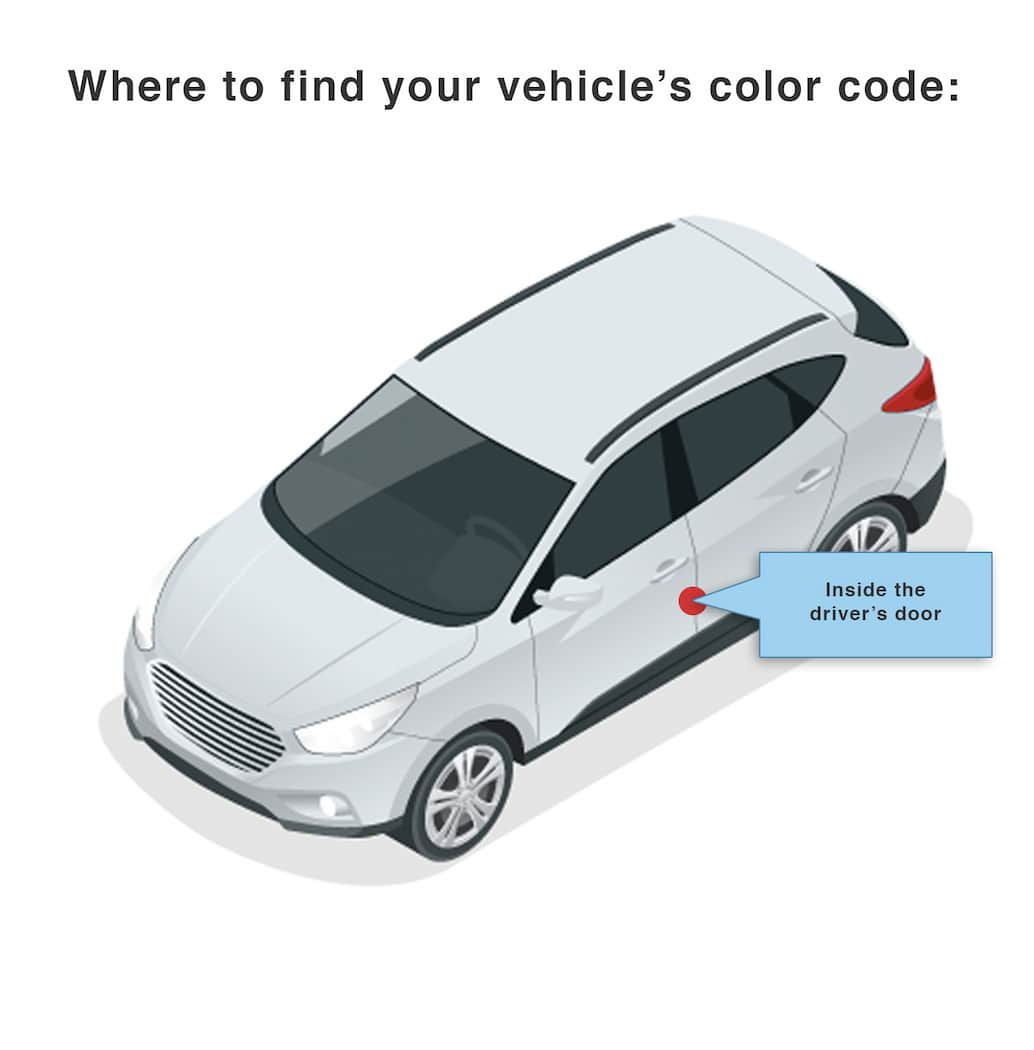
Ford paint color codes are on the drivers door jamb, on the color plate. The typical format is PM/M6599, though usually only PM appears. Example: PM corresponds to Bright Calypso Metallic Clearcoat PM/M6599; it may appear as PM Bright Calypso Metallic Clearcoat. Plates may show Exterior Paint Colors or EX PT; sometimes the color is embossed mid-plate. WB is wheelbase; above Wheel Base is EXT PNT, and to the right of EXT PNT is the code. Many mistake LX3 as the code.
Ford Escape Paint Info
Ford Escape Colors by Year
Let us know the year your Escape was manufactured. We'll eliminate colors that won't match your vehicle.
- 2027 (23 colors)
- 2026 (23 colors)
- 2025 (27 colors)
- 2024 (17 colors)
- 2023 (23 colors)
- 2022 (10 colors)
- 2021 (11 colors)
- 2020 (15 colors)
- 2019 (12 colors)
- 2018 (11 colors)
- 2017 (11 colors)
- 2016 (10 colors)
- 2015 (12 colors)
- 2014 (11 colors)
- 2013 (15 colors)
- 2012 (20 colors)
- 2011 (13 colors)
- 2010 (13 colors)
- 2009 (15 colors)
- 2008 (13 colors)
- 2007 (21 colors)
- 2006 (14 colors)
- 2005 (10 colors)
- 2004 (9 colors)
- 2003 (9 colors)
- 2002 (15 colors)
- 2001 (10 colors)