


Dodge Viper Touch Up Paint (70 OEM Colors)
Search for your Viper's color
-

Jaspis Steel Blue Effect
DodgeCOLOR CODEPBM -
Jaspis Steel Blue Effect 🔥 1 sold recently -

Blaze Red Crystal Pearl
DodgeCOLOR CODEPRH -
Blaze Red Crystal Pearl 🔥 1 sold recently -

Viper Red
DodgeCOLOR CODEPRN -
Viper Red 🔥 1 sold recently -

Stone White
DodgeCOLOR CODEPW1 -
Stone White 🔥 1 sold recently -

Velvet Red Pearl
DodgeCOLOR CODERV/
NRV - Velvet Red Pearl 🔥 1 sold recently -

Viper Steel Gray Pearl
DodgeCOLOR CODES6/
VS6 - Viper Steel Gray Pearl 🔥 1 sold recently -

Viper Blue Pearl
DodgeCOLOR CODESBE -
Viper Blue Pearl 🔥 1 sold recently -

Billet Metallic
DodgeCOLOR CODESC/
JSC - Billet Metallic 🔥 1 sold recently -

Black
DodgeCOLOR CODEX8/
DX8/ 601 - Black 🔥 1 sold recently -

Dark Ceramic Gray
DodgeCOLOR CODEAG/
MAG - Dark Ceramic Gray -

Viper Slate Crystal Pearlcoat
DodgeCOLOR CODEAP/
DAP - Viper Slate Crystal Pearlcoat -

Bright Blue Pearl
DodgeCOLOR CODEBC/
GBC - Bright Blue Pearl -

Competition Blue
DodgeCOLOR CODEBD/
LBD - Competition Blue -

Deep Sapphire Blue Metallic
DodgeCOLOR CODEBW/
YBW - Deep Sapphire Blue Metallic -

Shadow Blue Pearl
DodgeCOLOR CODEBY/
LBY - Shadow Blue Pearl -

Gunmetal Pearl
DodgeCOLOR CODECC/
LCC - Gunmetal Pearl
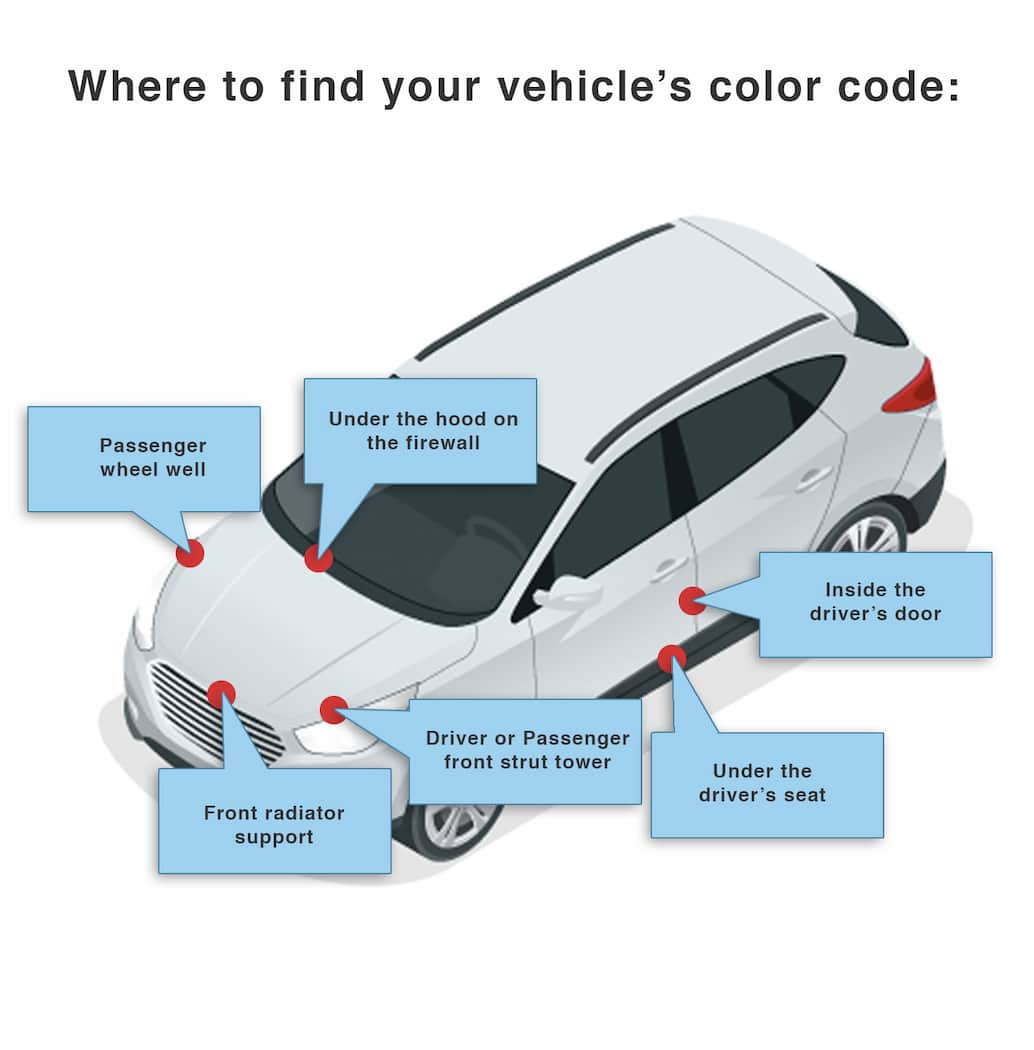
Find Your Dodge Viper Paint Code
Older Dodge paint codes were placed on top of the radiator support, often obscured by engine grease and oil. Later models list them on the drivers door jamb. The typical format is BS/GBS, but only BS is the color code; it can also appear as QBS, PBS, TBS with the first letter as a confusing Year Code. The G in GBS is not part of the color code. BS corresponds to Deep Water Blue Pearl Clearcoat; lately codes are simply listed as BS.
Dodge Viper Paint Info
Dodge Viper Colors by Year
Let us know the year your Viper was manufactured. We'll eliminate colors that won't match your vehicle.
- 2017 (16 colors)
- 2016 (17 colors)
- 2015 (15 colors)
- 2014 (13 colors)
- 2010 (15 colors)
- 2009 (10 colors)
- 2008 (10 colors)
- 2007 (12 colors)
- 2006 (6 colors)
- 2005 (5 colors)
- 2004 (4 colors)
- 2003 (6 colors)
- 2002 (3 colors)
- 2001 (4 colors)
- 2000 (3 colors)
- 1999 (4 colors)
- 1998 (5 colors)
- 1997 (4 colors)
- 1996 (4 colors)
- 1995 (3 colors)
- 1994 (4 colors)
- 1993 (4 colors)
- 1992 (1 colors)