


1996 Buick Touch Up Paint (26 OEM Colors)
Search for your color
-

Medium Marblehead Metallic
BuickCOLOR CODE03/
WA9924 - Medium Marblehead Metallic 🔥 1 sold recently -

Dark Green Gray Metallic
BuickCOLOR CODE18/
WA9795 - Dark Green Gray Metallic 🔥 1 sold recently -

Black
BuickCOLOR CODE41/
WA8555 - Black 🔥 1 sold recently -

Bright White Diamond Pearl Tri-coat
BuickCOLOR CODE78/
WA140B - Bright White Diamond Pearl Tri- coat 🔥 1 sold recently -

Cyclamen Metallic
BuickCOLOR CODE05/
WA117B - Cyclamen Metallic -

Bright White
BuickCOLOR CODE16/
WA9753 - Bright White -

Medium Cloisonne Metallic
BuickCOLOR CODE26/
WA127A - Medium Cloisonne Metallic -

Medium Adriatic Blue Metallic
BuickCOLOR CODE30/
WA9907 - Medium Adriatic Blue Metallic -

Light Driftwood Metallic
BuickCOLOR CODE33/
WA5322 - Light Driftwood Metallic -

Light Teal Metallic
BuickCOLOR CODE34/
WA129A - Light Teal Metallic -

Light Adriatic Metallic
BuickCOLOR CODE36/
WA121A - Light Adriatic Metallic -
Light Adriatic Metallic
BuickCOLOR CODE36/
WA173A - Light Adriatic Metallic -

Manta Green Metallic
BuickCOLOR CODE37/
WA204C - Manta Green Metallic -

Dark Adriatic Metallic
BuickCOLOR CODE39/
WA122A - Dark Adriatic Metallic -

Medium Sea Green Metallic
BuickCOLOR CODE42/
WA210C - Medium Sea Green Metallic -

Majestic Teal Metallic
BuickCOLOR CODE43/
WA272C - Majestic Teal Metallic

For small chips & scratches
Customized Color Paint Pen
Repair tiny chips and scratches with precision. Perfect for small nicks from rocks or door dings, the fine tip applicator makes it easy for beginners to achieve a clean, factory-quality finish.

For Medium-sized Chips & Scratches
Customized Color Paint Bottle
Tackle medium-sized scratches and chips with our Customized Color Paint Bottle. The built-in applicator brush provides smooth, controlled coverage, while the included basecoat delivers a perfect factory match in your custom paint color.

For larger areas & panel resprays
Customized Color Spray Can
Cover larger areas with a smooth, professional finish using ourcustomized color Spray Can. Designed for hoods, fenders, and larger scratches, this product provides consistent spray coverage and factory-matched color accuracy.

For large repairs & total resprays
Customized Color Professional Size Paint
When your repair job calls for more than a touch-up, step up to our professional-size automotive paints. Available in Pint, Quart, or Gallon sizes, these paints are ready-to-spray using an airless spray gun.

For small chips & scratches
Customized Color Tricoat Paint Pens
Repair tiny chips and scratches with precision. Perfect for small nicks from rocks or door dings, the fine tip applicator makes it easy for beginners to achieve a clean, factory-quality finish. Each order includes a basecoat and a midcoat pen.

For Medium-sized Chips & Scratches
Customized Color Tricoat Paint Bottles
Tackle medium-sized scratches and chips with our Customized Color Paint Bottles. The built-in applicator brush provides smooth, controlled coverage, while the basecoat & midcoat deliver a perfect factory match in your custom paint color.

For larger areas & panel resprays
Customized Color Tricoat Spray Cans
Cover larger areas with a smooth, professional finish using our customized color basecoat & midcoat Spray Cans. Designed for hoods, fenders, and larger scratches, this product provides consistent spray coverage and factory-matched color accuracy.
For large repairs & total resprays
Customized Color Tricoat Professional Size Paint
When your repair job calls for more than a touch-up, step up to our professional-size automotive paints. Available in Pint, Quart, or Gallon sizes, these paints are ready-to-spray using an airless spray gun. Each order includes a basecoat & a midcoat paint.
Find Your 1996 Buick Paint Code
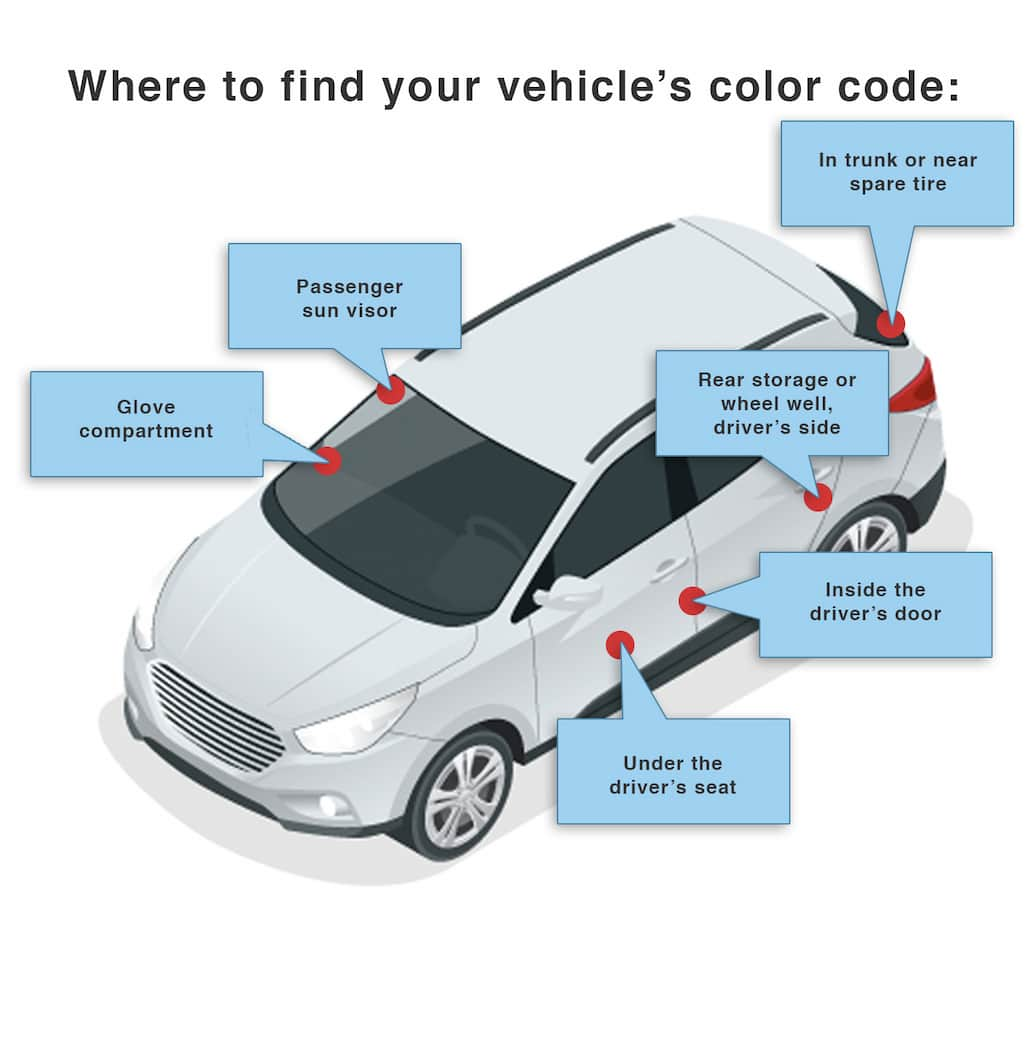
Buick used many different locations over the years, so the paint color plate can be hard to find. GM did not standardize the location. Commonly cited spots are the glove box or the spare tire well; otherwise it may be anywhere. The code format typically looks like 51/WA316N, usually preceded by BC/CC (BC/CC 51 or BC/CC 316N), and two-tone entries may show U or L (BC/CC U316N or BC/CC L316N).
1996 Buick Background Info
Buick Models Released in 1996
- All Other Models (26 colors)