


Audi Q2 Touch Up Paint (12 OEM Colors)
Search for your Q2's color
-

Glacier White Pearl Tricoat
AudiCOLOR CODELS9R/
2Y - Glacier White Pearl Tricoat 🔥 20 sold recently -

Mythos Black Metallic
AudiCOLOR CODELY9T/
03 - Mythos Black Metallic 🔥 17 sold recently -

Monsoon Gray Metallic
AudiCOLOR CODELX7R/
0C - Monsoon Gray Metallic 🔥 16 sold recently -

Brilliant Black
AudiCOLOR CODELY9B/
A2 - Brilliant Black 🔥 11 sold recently -

Florett Silver Metallic
AudiCOLOR CODELZ7G/
L5 - Florett Silver Metallic 🔥 8 sold recently -

Utopia Blue Metallic
AudiCOLOR CODELX5L/
D2 - Utopia Blue Metallic 🔥 3 sold recently -

Candy White
AudiCOLOR CODELB9A/
B4 - Candy White 🔥 1 sold recently -

Cuvee Silver Metallic
AudiCOLOR CODELX1Y/
0D - Cuvee Silver Metallic 🔥 1 sold recently -

Misano Red Pri Metallic
AudiCOLOR CODELZ3M/
N9 - Misano Red Pri Metallic 🔥 1 sold recently -

Tundra Brown Metallic
AudiCOLOR CODELW8Z/
S3 - Tundra Brown Metallic -

Ava Blue Metallic
AudiCOLOR CODELX5J/
K6 - Ava Blue Metallic -

Haina Blue Effect
AudiCOLOR CODELX5K -
Haina Blue Effect
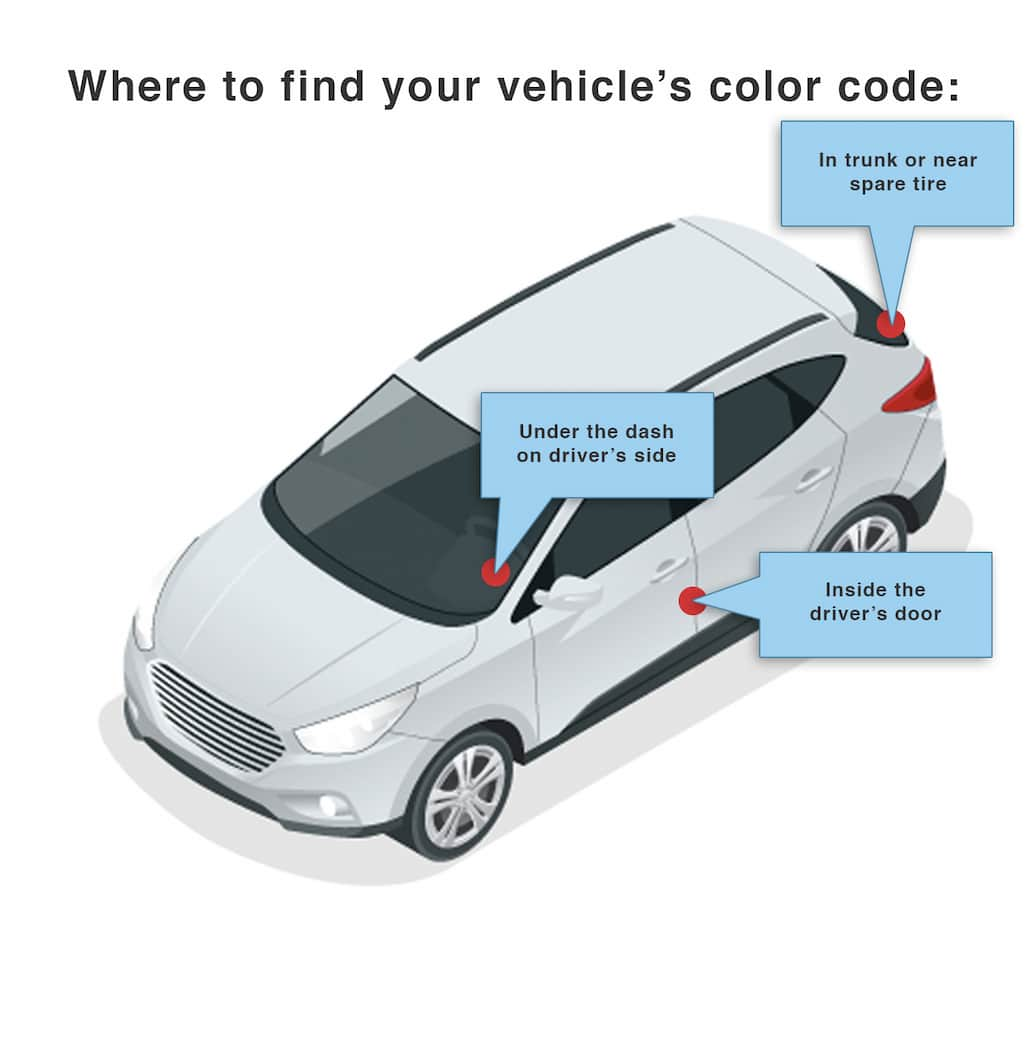
Find Your Audi Q2 Paint Code
Audi paint color codes are printed on a paper color id tag, often found around the spare tire area; some Audis also have a metal plate on the driver door jamb. The paper tag can fall off and disappear over time, leaving codes unavailable. Codes can include two parts, e.g., LY9H and P1; LY9H often corresponds to Polar White Clearcoat, and P1 can be used for the same white on some models. Older Audi models can be hard to identify by code; custom matching may be required.
Audi Q2 Paint Info
Audi Q2 Colors by Year
Let us know the year your Q2 was manufactured. We'll eliminate colors that won't match your vehicle.
- 2016 (12 colors)